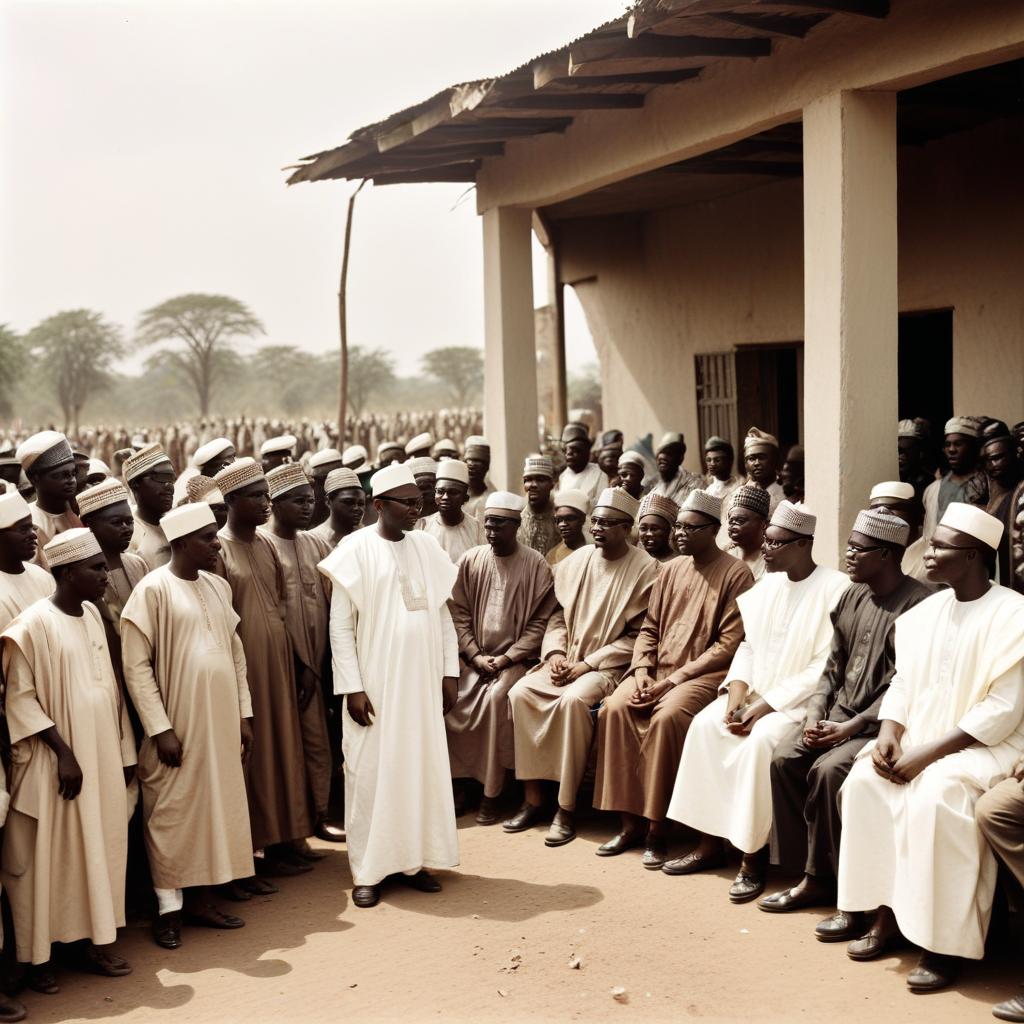
Of course. The creation of Nigeria as a single political entity was not a sudden event but a gradual... - AI Avatar by Simon Akaayar | Percify AI Avatar Generator

Of course. The creation of Nigeria as a single political entity was not a sudden event but a gradual process orchestrated by the British during the colonial era. It was primarily an administrative and economic decision, not one based on the cultural, linguistic, or religious ties of the incredibly diverse people living there. Here is a breakdown of how Nigeria was created, from its early beginnings to its official naming and independence. 1. The Pre-Colonial Landscape: A Mosaic of Kingdoms Before the British arrived, the area we now know as Nigeria was home to hundreds of distinct ethnic groups and powerful, independent states. The most prominent included: · The Sokoto Caliphate: A vast, powerful Islamic empire in the north, founded after the Fulani Jihad (1804-1808). · The Kanem-Bornu Empire: Another ancient Islamic state around Lake Chad, with a history spanning over a thousand years. · The Yoruba Kingdoms: In the southwest, including the Oyo Empire, which was a major regional power, as well as Ile-Ife, Ijebu, and others. · The Kingdom of Benin: A highly centralized and famous kingdom in the south, known for its advanced bronze and brass art. · The Igbo Societies: In the southeast, mostly organized as independent village republics and councils, without a centralized monarchy. These regions had their own distinct languages, cultures, systems of government, and trade networks. 2. The British Entry: Trade and Conquest (19th Century) British interest began with the lucrative transatlantic slave trade, followed by the "Legitimate Trade" in palm oil, which was vital for the Industrial Revolution. Key steps in their consolidation of power were: · The Annexation of Lagos (1861): To combat the slave trade and secure their commercial interests, the British used a treaty dispute as a pretext to bomb Lagos and force its King, Oba Dosunmu, to cede Lagos as a British colony. This gave them a strategic foothold. · The Royal Niger Company (1886-1900): In the interior, the British government chartered the Royal Niger Company, led by Sir George Taubman Goldie. This company acted as a pseudo-government, signing (often deceptive) treaties with local rulers and monopolizing trade along the Niger River. Its territory mainly covered the north and the Niger Delta. 3. The Key Figure: Lord Frederick Lugard and the Amalgamation Lord Lugard was the primary architect of modern Nigeria. He developed the system of "Indirect Rule," which involved governing through existing local rulers to minimize cost and resistance. · The Protectorate of Southern Nigeria (1900): The British government revoked the Royal Niger Company's charter and established direct control over the southern territories. · The Protectorate of Northern Nigeria (1900): Lugard was appointed as the High Commissioner of the Northern Protectorate, which he conquered, notably defeating the Sokoto Caliphate in 1903. · The Amalgamation of 1914: This is the single most important event in Nigeria's creation. Lugard, now Governor-General, merged the Protectorate of Southern Nigeria and the Protectorate of Northern Nigeria into one single administrative unit called the "Colony and Protectorate of Nigeria." Why did they amalgamate? The primary reason was economic.The Northern Protectorate was running a deficit and was expensive to administer, while the South, with its seaports and cash crops, was generating a surplus. The amalgamation allowed the British to use the South's revenue to fund the administration of the entire territory, creating a financially self-sustaining colony. 4. The Name "Nigeria" The name was coined in 1897 by Flora Shaw, a British journalist who later married Lord Lugard. She suggested the name in a letter to The Times newspaper, deriving it from the Niger River, which flowed through the territories. She thought "Nigeria" was a more distinct and convenient name than other cumbersome official titles. 5. The Road to Independence (1914-1960) The amalgamation created the geographical framework, but Nigeria remained a deeply divided country. The British administration reinforced these divisions by governing the North and South separately. · Regionalism: In 1939, Nigeria was divided into three regions: the Northern Region, Western Region (Yoruba-dominated), and Eastern Region (Igbo-dominated). This structure further entrenched ethnic identities in politics. · Rise of Nationalism: After World War II, educated elites like Nnamdi Azikiwe (East), Obafemi Awolowo (West), and Ahmadu Bello (North) began to agitate for self-rule, leading to the development of political parties that were often regionally and ethnically based. · Independence: A series of constitutions gradually gave Nigerians more self-governance. Finally, on October 1, 1960, Nigeria gained full independence from Britain. It became a republic in 1963, with Nnamdi Azikiwe as its first President. Summary and Lasting Consequences In essence, Nigeria was created by the British for British administrative and economic convenience. The 1914 amalgamation forced hundreds of distinct nations into a single state without regard for their deep-seated differences. This artificial creation has had profound and lasting consequences: · Ethnic and Religious Divide: The fundamental cleavage between the predominantly Muslim North and the predominantly Christian South remains a source of political tension and conflict. · Weak National Identity: Loyalty to ethnic group and region often supersedes loyalty to the Nigerian nation. · The Civil War: These tensions culminated in the Nigerian Civil War (1967-1970), when the Eastern Region attempted to secede as the Republic of Biafra. In conclusion, Nigeria was not a nation that evolved organically, but a colonial construct—a "mosaic without mortar"—whose creation continues to shape its political and social challenges today.

115

Views

0

Likes

0

Comments

0

Shares

#people#artistic#motivational#storytelling
Oct 15, 2025
photo

Comments (0)