Quick Answer
Clone Yourself builds the two assets every other Percify studio consumes: a face, from one clear photo, and a voice, from a sample of at least 5.6 seconds. A custom avatar costs 5 credits and a voice clone costs 5 credits, both charged once. It is a setup step rather than a studio — once both exist, the talking avatar, the podcast, the dub and the replicated short all run as you instead of as a stock presenter.
Clone Yourself is a setup step, not a studio. What a good source photo and a good voice sample look like, what each costs, and why doing it first changes everything.
Keep reading
Related next steps
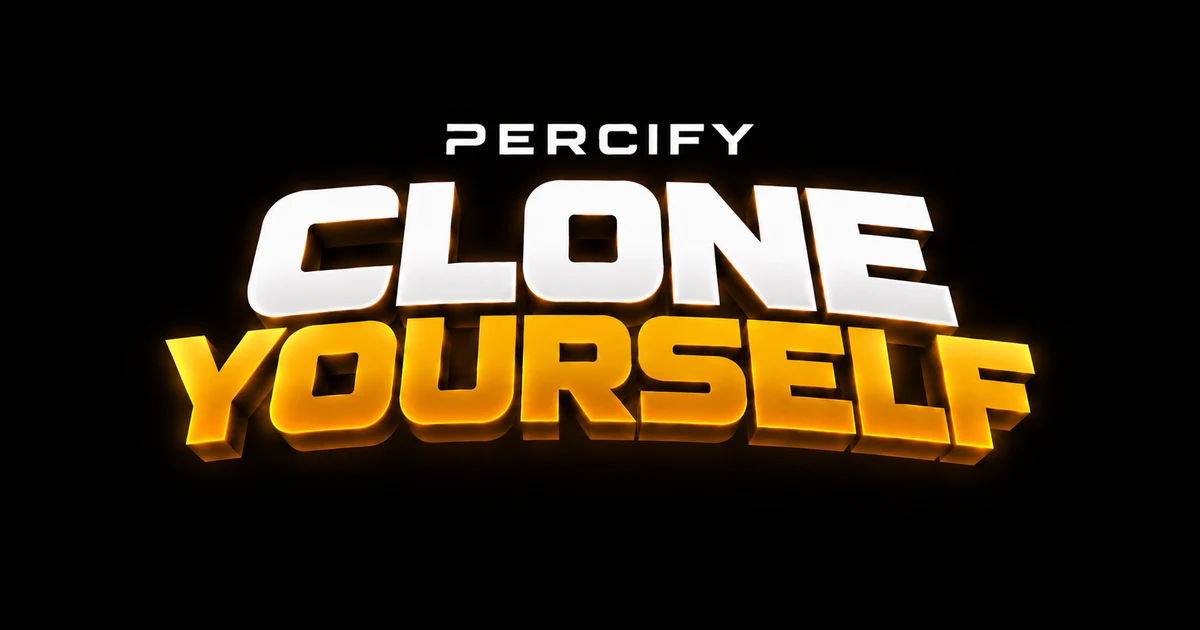
Every other studio on Percify asks the same two questions before it can do anything: whose face, and whose voice. Clone Yourself answers both, once, and then gets out of the way.
That framing matters because it changes the order you should work in. People usually arrive wanting a video, spend their first credits on a stock presenter, decide the result is fine but impersonal, and only then wonder whether they could have used themselves. Doing the clone first costs about ten credits and makes everything afterwards yours.
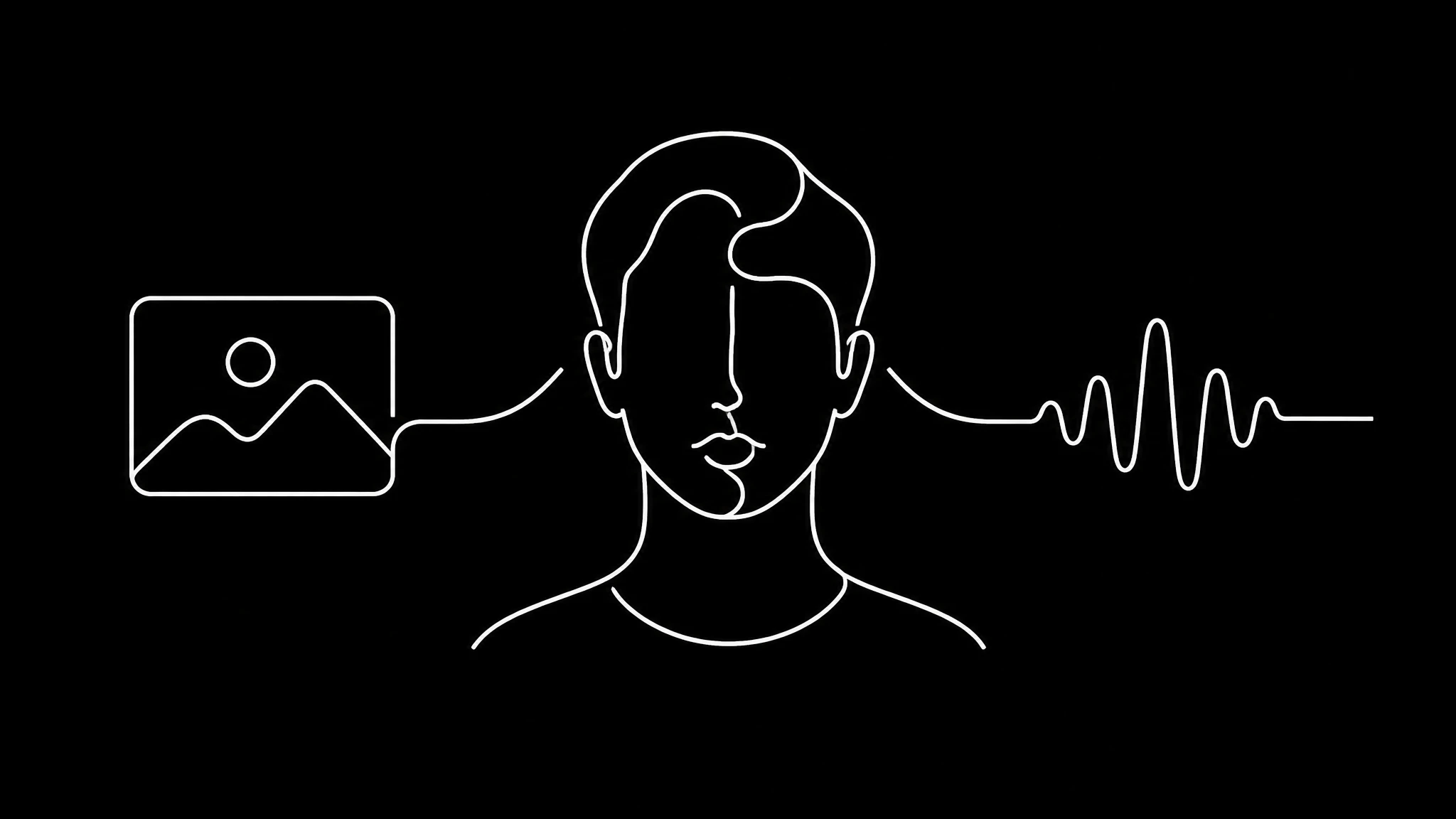
The face: one photo, and what makes it good
You upload one clear photo. There is no scanning session, no turntable and no video capture.
Because a lip-sync model rebuilds the mouth region rather than animating a rig, the photo decides quality more than any setting does. The rules are unglamorous:
- The face should fill at least a third of the frame. Below roughly a quarter of frame width there is not enough mouth detail to rebuild, and the result reads soft no matter what resolution you render at.
- Nothing across the mouth. No hand, no microphone, no stray hair.
- Even, frontal light. Hard side light bakes a shadow into every frame the model generates from it.
- A neutral or slightly open mouth. A wide smile is a hard starting position to animate out of.
About 9% of clips get retried on the platform, and the overwhelming majority of those retries trace back to the source image rather than to the render. Choosing the photo carefully is the cheapest quality decision available — the full diagnosis of what goes wrong is worth five minutes before you upload.
A custom avatar costs 5 credits. Generating from it afterwards costs 2.
The voice: 5.6 seconds is the floor, not the target
The voice clone takes a reference recording. The engine needs at least 5.6 seconds of it; anything shorter is padded by repeating the clip to about 6.2 seconds so the request still works.
That padding is a courtesy, not a feature. A three-second clip looped twice still contains three seconds of vocal information, and the clone comes out flat. Record 15 to 30 seconds and say something with range in it — a question, a statement, a number — rather than one even sentence.
Room matters more than microphone. Curtains, a sofa or a bed beat bare walls and a good mic. Keep a steady distance. If your levels swing, normalise the file first with ffmpeg's loudnorm filter ↗.
Cloning costs 5 credits, once. The voice side is covered in full here.
What the twin unlocks
Once a face and a voice exist, they are inputs everywhere:
| studio | what your twin does there |
|---|---|
| Avatar Studio | says a written script to camera |
| Voice Studio | speaks a dub in your own voice |
| Podcast Studio | takes one side of a two-person conversation |
| Content Replication | performs a proven short's structure as you |
That table is the argument for doing this first. Platforms that build the presenter for you, such as Synthesia ↗, keep the likeness inside their own product; a twin you own is one you can point at any of these.
That last one is the reason to bother. A format that worked for someone else, performed by a stock presenter, is a copy. Performed by you, it is your version of a structure that already earns attention. The replication write-up explains what actually gets reused and what does not.
The part worth thinking about before you start
A digital twin is a likeness, and likenesses carry obligations. Two are practical rather than philosophical:
- Clone only faces and voices you have the right to use. Yours is the easy case. A colleague, a client or a public figure is not, regardless of what the tool will technically accept. The EU AI Act's transparency provisions ↗ and equivalent rules elsewhere are converging on disclosure for synthetic likenesses, and the direction of travel is one way. The industry answer taking shape is provenance metadata: the C2PA standard ↗ attaches a signed record of how a file was made, and the major camera and model vendors are adopting it.
- Decide your disclosure position once. Whether you label AI-presented video is a brand decision, not a legal minimum in every market — but deciding it deliberately beats deciding it after someone asks. We wrote up what to check before publishing as a checklist rather than an essay.
None of that is a reason not to build a twin. It is a reason to build one of yourself.
What it costs, end to end
| step | credits | how often |
|---|---|---|
| custom avatar | 5 | once |
| voice clone | 5 | once |
| avatar generation | 2 | per generation |
| talking-head render (480p average) | 69 | per clip |
The setup is roughly a tenth of what one finished video costs, which is why doing it first is close to free in practice. A free account starts with credits and no card, so the twin can exist before you decide anything about plans — the full pricing is one meter across images, voices and video, with no quality or watermark tiers to buy past.
Do this in fifteen minutes
- Find a photo where your face fills a third of the frame, evenly lit, mouth clear.
- Record 20 seconds of yourself talking in a soft room at a steady distance.
- Build the avatar (5 credits) and the voice (5 credits).
- Render one 20-second clip at 480p to check the pair works together.
- Only then decide what you actually want to make.
Step 4 is the one people skip. A short test render tells you within three minutes whether the photo was the right photo, and it costs less than discovering it on a script you cared about. If you would rather see other people's results first, the explore page is real output rather than a showreel, and the comparison against other avatar generators is a fair place to start if you are not sure Percify is the tool.
Related on Percify
- Avatar Studio — make the twin speak.
- Voice Studio — the voice half in detail.
- Content Replication — perform a proven format as yourself.
- Podcast Studio — put the twin in a conversation.
- Every studio at a glance — the whole product on one page.
- Lip sync tools compared — what else is out there.
- Real output — results rather than a showreel.
Ready to Create Your Own AI Avatar?
Make a talking video of yourself from one photo, in your own voice. No watermark on any plan.
Cancel anytime from your profile
Got questions?
Frequently asked
One clear photo where your face fills at least a third of the frame, and a voice recording of at least 5.6 seconds — ideally 15 to 30 seconds. No filming session, no scanning rig and no video capture.
About 10 credits: 5 for the custom avatar and 5 for the voice clone, both charged once. Generating from the avatar afterwards costs 2 credits, and a finished talking-head render averages 69 credits at 480p.
Yes, provided the framing is right. Lip-sync models rebuild the mouth region from the source frame, so a close-up with even light and an unobstructed mouth matters far more than the number of photos.
Before. The setup is roughly a tenth of what a single finished video costs, and every studio consumes the face and the voice. Making the first video with a stock presenter usually means making it twice.
Cloning your own likeness is straightforward. Cloning someone else's — a colleague, a client, a public figure — needs their permission, and transparency rules such as the EU AI Act's provisions on synthetic media are moving toward required disclosure. Decide your labelling position deliberately rather than after someone asks.