Quick Answer
The median AI testimonial video that people actually finish is 19 seconds long, and two thirds are under 30 seconds, measured across 179 finished clips from 61 accounts. Choose a tool by how well it handles that short format rather than the two minute case study most guides describe. Using AI to shorten, translate or re render a real customer's recorded words is legitimate; generating a testimonial the customer never gave is banned under 16 CFR Part 465.
We measured 179 finished clips: the median AI testimonial video is 19 seconds, not two minutes. The five tool approaches compared, with real render costs.
Keep reading
Related next steps
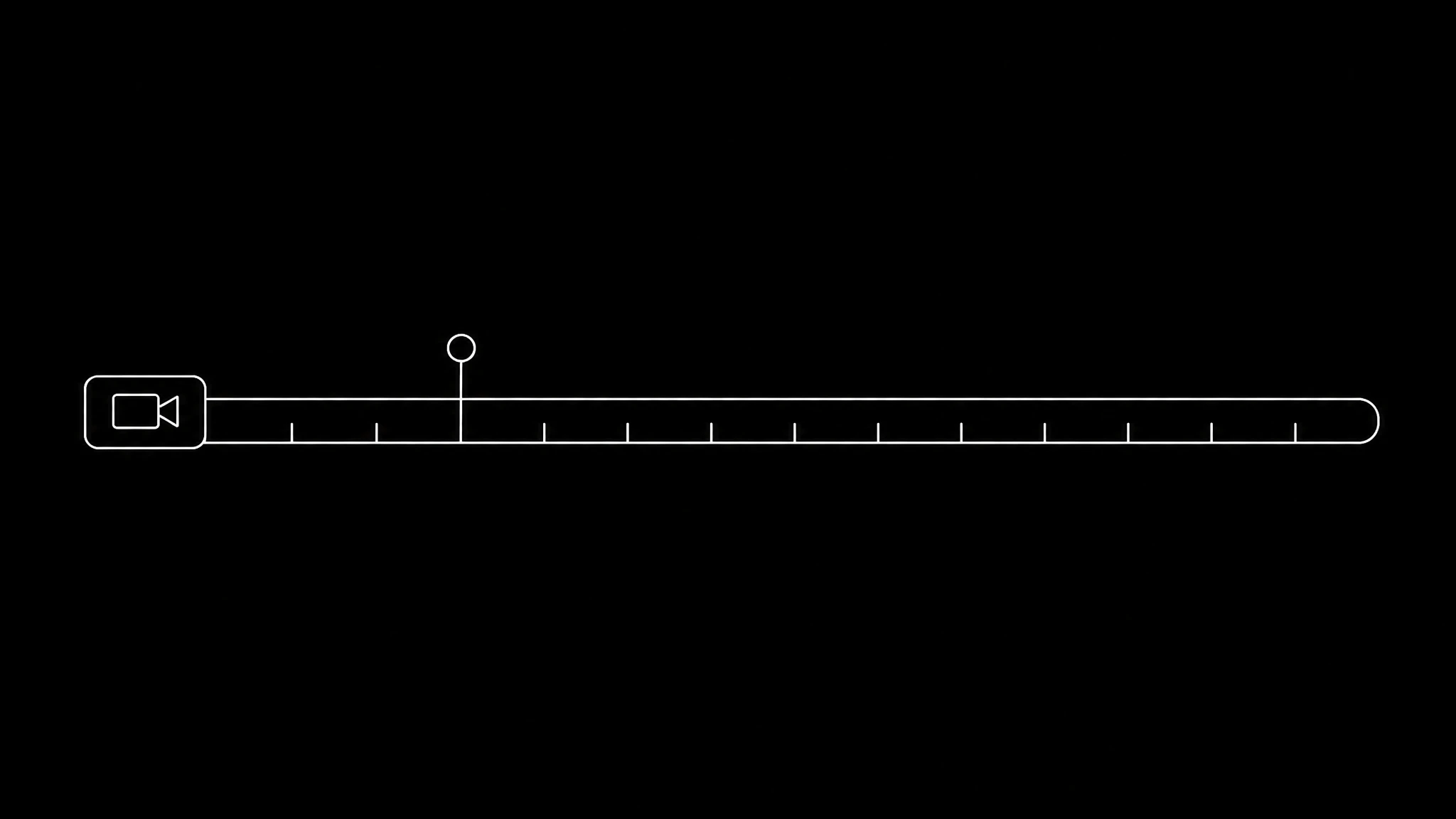
Every guide to testimonial video tells you to produce a two minute customer story. We looked at what people actually finish, and the median is nineteen seconds.
That number comes from our own job records, not from a survey. Between 7 May and 2 September 2026, 61 people produced 179 finished talking head clips on our platform. Half of them are under nineteen seconds. Two thirds are under thirty. Five clips in the whole set run longer than two minutes. The format the industry recommends is the format almost nobody ships.
If you are choosing a tool for testimonial video, that is the fact to choose on. A tool that is pleasant for a two minute edit and awkward for a twenty second one is optimised for a video you will not make.

What 179 finished clips look like
| clip length | clips | share |
|---|---|---|
| under 15 seconds | 71 | 39.7% |
| 15 to 30 seconds | 47 | 26.3% |
| 30 to 60 seconds | 41 | 22.9% |
| 1 to 2 minutes | 15 | 8.4% |
| over 2 minutes | 5 | 2.8% |
The shape is consistent across 61 separate accounts, so it is not one heavy user dragging the average. It matches what the research on video attention has said for years: Nielsen Norman Group ↗ found viewers abandon long video quickly unless they chose it deliberately, and Wistia's engagement data ↗ shows engagement falling off a cliff past the first minute. Our records are the production side of the same finding. People stop making what nobody watches.
The five approaches, and what each does to a nineteen second clip
There are only five things a tool can do with a customer testimonial. Every product in this category is one of them.
| approach | what it needs | good for | the catch |
|---|---|---|---|
| Capture and collect | a link sent to the customer | genuine words, on the record | you get whatever their webcam and room gave you |
| Edit only | existing footage | tightening a long take | cannot fix a bad take, only shorten it |
| Stock presenter | a script | volume, consistency | the face is not your customer, so it is not a testimonial |
| Avatar from a photo | one photo and the audio | reshoots, translations, short clips | the source recording still has to exist |
| Full synthesis | a script | nothing you should ship as a testimonial | the person never said it |
The first two are honest and limited. The last one is the trap, and the legal section below is about it. The interesting middle is the fourth, because it is the only one that solves the problem testimonial video actually has, which is not production quality. It is that you cannot get the customer back.
A customer gives you eight minutes on a call. You get one usable take. Three weeks later marketing wants it in Spanish, wants a fifteen second cut for paid social, and wants the bit where they said the wrong product name fixed. Every one of those is a reshoot, and the customer is not coming back. Turning one recorded take into those variants is the job, and it is the same machinery as a spokesperson video that converts, pointed at a real person instead of a rented one.
The line you cannot cross
A testimonial from a person who did not say it is a fake testimonial, and since October 2024 that is explicitly illegal in the United States. The Federal Trade Commission's rule at 16 CFR Part 465 ↗ bans fake and misleading consumer reviews and testimonials, including those generated to appear to come from someone who does not exist or never used the product. The announcement of the final rule ↗ sets out civil penalties per violation, and the endorsement guides ↗ explain how the agency reads disclosure.
The practical test is simple. Did a real customer say these words, about this product, and agree to them being published? If yes, the tooling you used to render the clip is a production detail. If no, no amount of disclosure makes it a testimonial. We wrote the longer version of this checklist in what to check before shipping AI generated video, and it applies to every synthetic frame you publish, not only to testimonials.
Three things worth writing into your consent form, because they are the ones people forget: the right to translate the words, the right to re shoot the delivery without a new recording session, and an end date. A customer who leaves for a competitor in 2028 should not still be endorsing you.
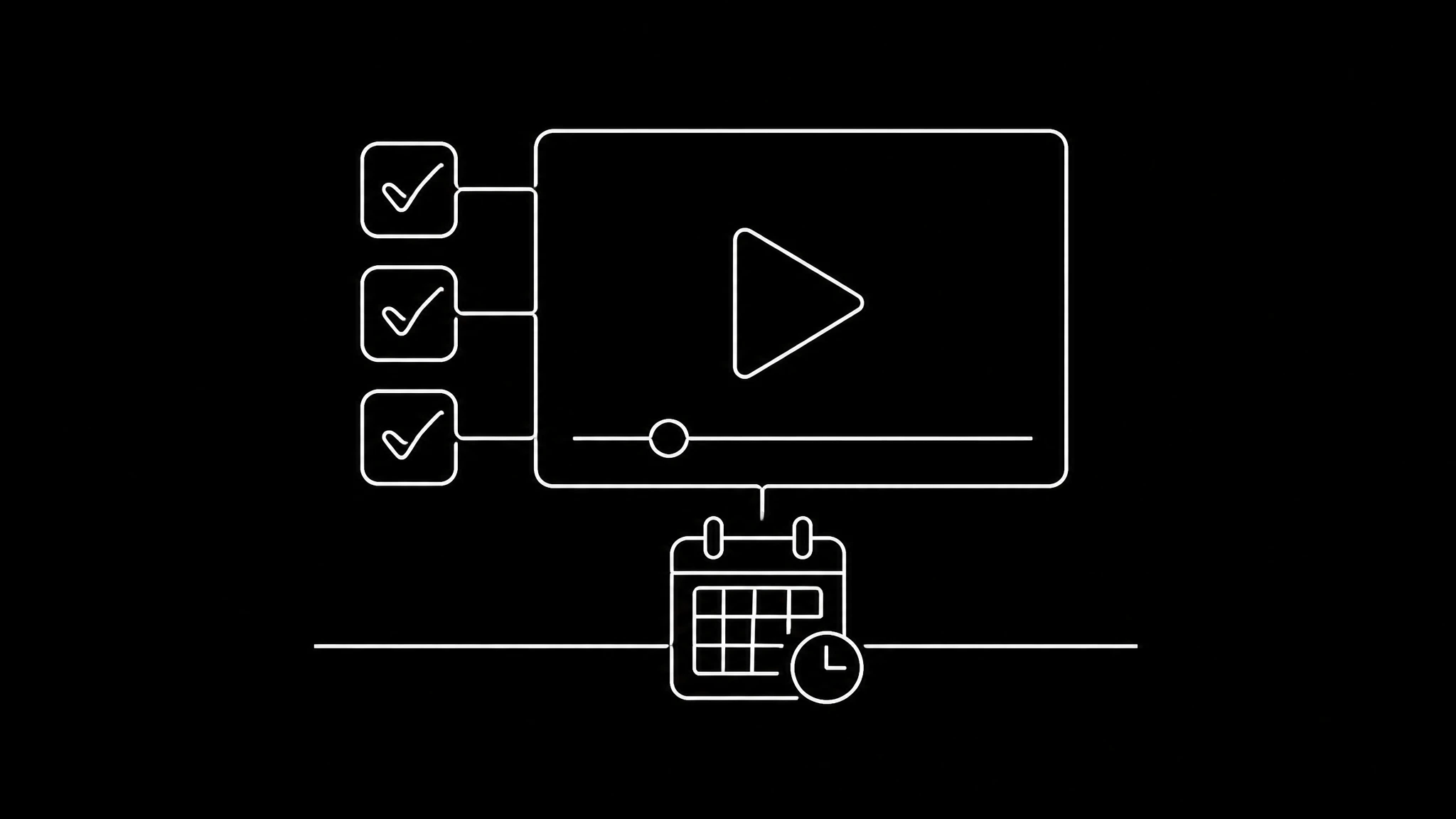
What a nineteen second testimonial costs to make
This is where the length finding pays. Render cost scales with clip length, so the format people actually ship is also the cheap one.
Across the same 179 renders, the median clip took 168 seconds of processing, roughly seven and a half seconds of compute for every second of finished video. The slowest tenth took 757 seconds. On a nineteen second clip that is under three minutes of waiting, which is short enough to iterate on. On a two minute clip it is closer to fifteen, which is long enough that you stop trying variations, and trying variations is the entire advantage.
Resolution is the other lever, and it is the one most people get wrong. Of the 179 renders, 121 were made at 480p and 52 at 720p. The 720p renders cost an average of 155 credits against 69 for 480p, so more than twice the price. For a testimonial destined for a feed, where the clip plays in a column a few hundred pixels wide, the extra resolution is spent on pixels nobody sees. Our pricing page has the current credit rates, and the model catalogue lists what each engine charges. Two thirds of our users have already worked this out.
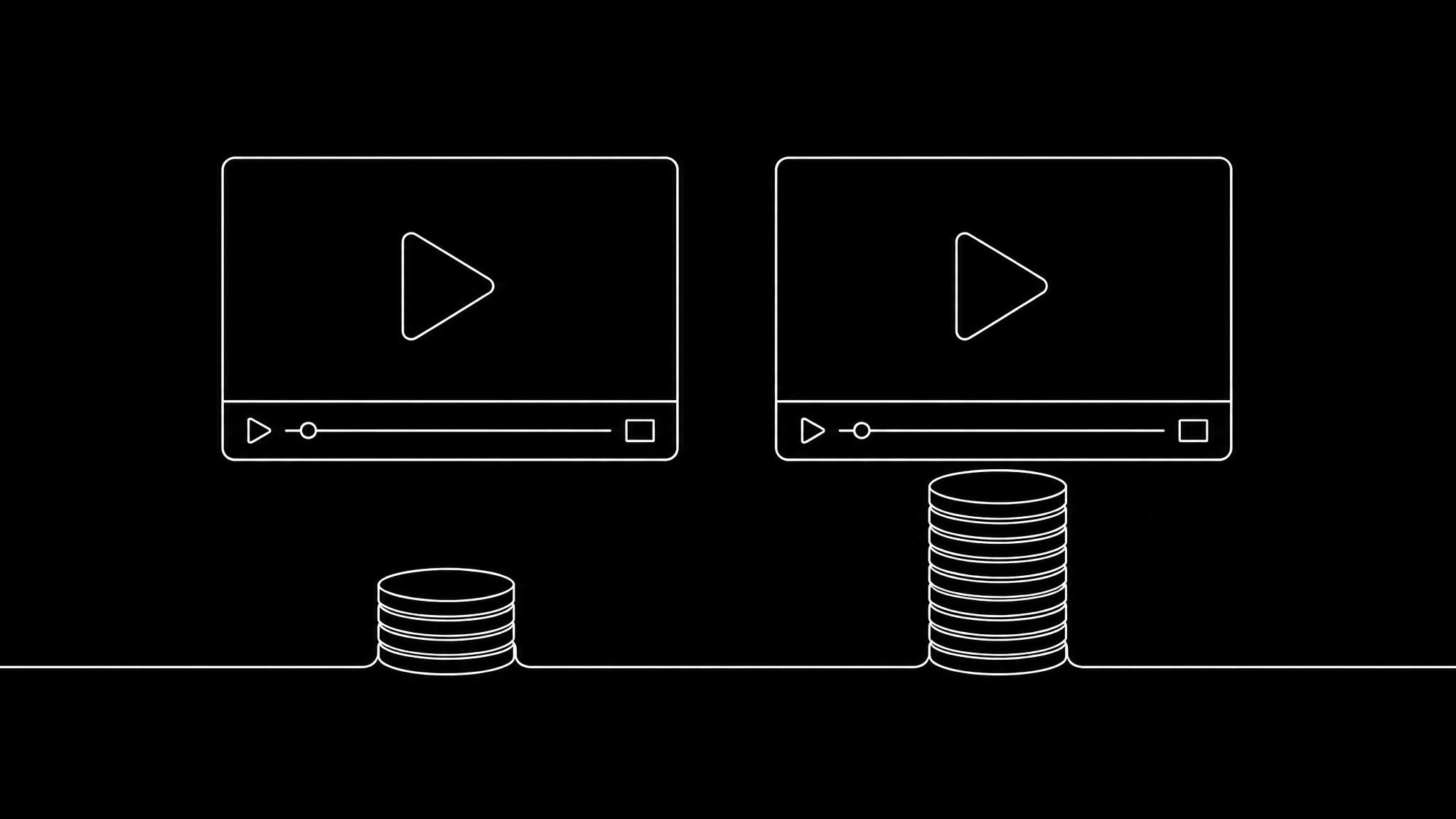
Making one, in order
- Get the recording and the consent in the same session. The recording is the raw material and the consent is what makes it publishable. Collecting them weeks apart is how projects die.
- Cut to the one sentence that carries the claim. Nineteen seconds is roughly forty five words. That is one specific outcome with a number in it, not a story arc.
- Fix the delivery, not the words. If the sync drifts or the mouth reads wrong, that is a production fault with known causes, and we listed them in how to fix lip sync that looks wrong. Rewriting what the customer said is a different thing entirely.
- Render at the size it will play. 480p for a feed, 720p when it goes on a landing page above the fold.
- Translate last. Once the English cut is approved, dubbing it is mechanical, and the step by step version covers the settings that matter.
- Caption everything. Most feed playback is muted. The W3C accessibility guidance on captions ↗ is the reference, and it is a legal requirement in more places every year.
Which tool
If you need to collect testimonials from customers who are willing to record themselves, use a capture tool and stop reading here. That is a different product category and it does the job well.
If you already have the recording and the problem is everything that comes after it, the question is how well the tool holds sync on a short clip in the language you need. We compared the engines on exactly that in AI lip sync software compared, ranked the apps in the best AI lip sync app, and there are further rankings in top 5 AI avatar platforms for lip sync and voice cloning and top 5 lip sync apps for AI avatars. If you are testing before you commit, free AI avatar generators and how to create a free AI avatar cover what the free tiers actually allow, and five apps to animate a picture covers the photo to video step on its own.
Percify does the fourth approach in the table. One photo of your customer and the audio they already gave you becomes a clip, and the same recording can be remade shot for shot or dubbed without booking anyone. Teams running this at scale use avatars for business, and the same pipeline runs creator formats, podcast video and sports highlight edits from the same flows.
What it does not do is invent a customer. Nothing should.
Ready to Create Your Own AI Avatar?
Make a talking video of yourself from one photo, in your own voice. No watermark on any plan.
Cancel anytime from your profile
Got questions?
Frequently asked
Nineteen seconds is the median length of the 179 finished talking head clips in our records, and two thirds are under thirty seconds. That is roughly forty five words, which is one specific outcome rather than a story. The two minute case study that most guides recommend accounts for under 3% of what people actually finish.
Yes, when a real customer said the words and consented to them being published. Using AI to translate, shorten or re render that recording is a production choice. Generating a testimonial from a person who never said it, or who does not exist, is banned in the United States under 16 CFR Part 465, with civil penalties per violation.
Across 179 renders the median took 168 seconds of processing, about seven and a half seconds of compute per second of finished video, so a nineteen second clip lands in under three minutes. Resolution drives price more than length: 720p renders averaged 155 credits against 69 for 480p.
480p for anything that plays in a social feed, where the clip is a few hundred pixels wide and the extra resolution is invisible. 720p when the video sits on a landing page at a larger size. Of our 179 renders, 121 were made at 480p, which suggests most people have already reached this conclusion.
Yes, and it is the main reason to use AI here at all. One approved take can be dubbed into other languages without bringing the customer back. Write the translation right into the consent form, because a customer who agreed to an English clip has not necessarily agreed to a Spanish one.
A testimonial is a real customer saying what happened to them. A synthetic spokesperson is a rented or generated face delivering your script. Both are legitimate, but only one is a testimonial, and presenting the second as the first is what the FTC rule prohibits.